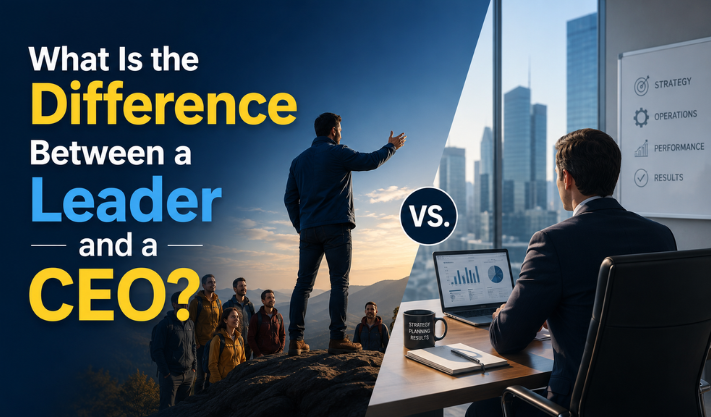
What Is the Difference Between a Leader and a CEO? Complete FAQ Guide
Leadership and business management are often discussed together, but a leader and a CEO are not always the same thing. While both roles involve guiding people, making decisions, and achieving goals, they differ in responsibility, authority, focus, and impact.
If you are searching for the difference between a leader and a CEO, this FAQ guide explains the meaning, roles, responsibilities, skills, and key differences in a simple and conversational way.
What Is a Leader?
A leader is a person who influences, motivates, and guides others toward achieving a shared goal.
A leader does not always need a formal title or position. Anyone who inspires people, solves problems, creates direction, and helps others succeed can demonstrate leadership.
Leaders can exist at every level of an organization, including:
- Team leaders
- Department managers
- Project leaders
- Entrepreneurs
- Community leaders
- Executives
A good leader focuses on people, teamwork, communication, and creating a positive environment.
What Is a CEO?
A CEO (Chief Executive Officer) is the highest-ranking executive in a company. The CEO is responsible for managing the overall direction, strategy, and performance of the organization.
The CEO works with:
- Executives
- Managers
- Employees
- Investors
- Customers
- Business partners
A CEO makes high-level decisions that affect the entire company.
Typical CEO responsibilities include:
- Creating business strategies
- Setting company goals
- Making major decisions
- Managing organizational performance
- Representing the company
- Building relationships with stakeholders
A CEO is a formal business position, while leadership is a skill that anyone can develop.
What Is the Main Difference Between a Leader and a CEO?
The biggest difference is that a CEO is an official position, while a leader is someone who influences and inspires others.
A CEO may have authority because of their role, but a true leader earns trust through actions and behavior.
Key differences include:
| Leader | CEO |
|---|---|
| Focuses on people and inspiration | Focuses on company strategy and results |
| Can exist at any level | Usually the highest executive role |
| Influences through trust | Makes decisions through authority and responsibility |
| Develops teams | Runs the organization |
| Builds motivation | Creates business direction |
A successful CEO usually needs strong leadership skills to guide the company effectively.
Can a CEO Be a Leader?
Yes, a CEO can be a leader, but having the CEO title does not automatically make someone a good leader.
An effective CEO combines:
- Strategic thinking
- Communication skills
- Emotional intelligence
- Decision-making ability
- Vision
A CEO who only gives instructions may manage a company, but a CEO who inspires people creates long-term success.
Can a Leader Become a CEO?
Yes, many successful CEOs start as strong leaders before reaching executive positions.
Leadership skills that help someone become a CEO include:
- Problem-solving
- Team building
- Strategic planning
- Communication
- Adaptability
- Confidence
However, becoming a CEO also requires business knowledge, experience, and the ability to manage complex responsibilities.
What Are the Responsibilities of a Leader?
A leader’s main responsibility is to guide and support people.
Important leadership responsibilities include:
Inspiring Others
Leaders motivate people by creating purpose and encouraging teamwork.
Building Trust
Strong leaders create trust through honesty, consistency, and fairness.
Improving Team Performance
Leaders help people develop skills and reach their potential.
Solving Problems
Leaders identify challenges and help teams find solutions.
Creating a Positive Culture
Leaders influence workplace values and behavior.
What Are the Responsibilities of a CEO?
A CEO’s responsibilities focus on the entire organization.
Key CEO responsibilities include:
Setting Company Vision
The CEO defines where the company is going and creates long-term goals.
Making Strategic Decisions
CEOs decide on investments, expansion, partnerships, and business priorities.
Managing Company Performance
A CEO monitors financial results, operations, and overall growth.
Representing the Organization
CEOs communicate with investors, customers, employees, and the public.
Building Executive Teams
A CEO selects and guides senior leaders who manage different areas of the company.
Do Leaders and CEOs Need the Same Skills?
Some skills overlap, but CEOs often need additional business and strategic abilities.
Important skills for leaders include:
- Communication
- Empathy
- Motivation
- Problem-solving
- Team management
Important skills for CEOs include:
- Business strategy
- Financial understanding
- Decision-making
- Risk management
- Corporate governance
The best CEOs usually combine both leadership and management skills.
Is a Manager the Same as a Leader or CEO?
No, managers, leaders, and CEOs have different roles.
A manager usually focuses on:
- Planning tasks
- Organizing resources
- Monitoring performance
- Achieving short-term goals
A leader focuses on:
- Inspiring people
- Creating motivation
- Developing relationships
A CEO focuses on:
- Company-wide strategy
- Long-term growth
- Major decisions
A person can be a manager, leader, and CEO at different times or even at the same time.
Why Does Leadership Matter for CEOs?
Leadership is essential because CEOs must guide people through challenges and change.
A CEO with strong leadership skills can:
- Build a motivated workforce
- Create company loyalty
- Encourage innovation
- Handle difficult situations
- Improve business performance
Without leadership, a CEO may struggle to create a strong company culture.
What Makes a Great CEO?
A great CEO usually has a combination of leadership and business skills.
Successful CEOs often demonstrate:
- Clear vision
- Strong communication
- Emotional intelligence
- Accountability
- Innovation
- Strategic thinking
- Resilience
Great CEOs do not only focus on profits; they also consider employees, customers, and long-term impact.
What Makes a Great Leader?
A great leader is someone who helps others succeed.
Common qualities of effective leaders include:
- Honesty
- Confidence
- Active listening
- Empathy
- Responsibility
- Adaptability
- Positive attitude
Leadership is not only about giving directions. It is about creating trust and encouraging others.
Can Someone Be a Leader Without Being a CEO?
Yes, absolutely.
Leadership does not depend on a job title.
A person can show leadership by:
- Helping teammates
- Taking responsibility
- Solving problems
- Supporting others
- Creating positive change
Many successful organizations have strong leaders at every level.
FAQs
What is the difference between a CEO and a leader?
A CEO is a formal executive position responsible for running a company, while a leader is someone who influences and guides others.
Is every CEO a leader?
No. A CEO has authority because of their position, but effective leadership requires trust, communication, and the ability to inspire people.
Can a leader become a CEO?
Yes. Strong leadership skills can help people develop into CEOs when combined with business knowledge and experience.
Who is more important, a leader or a CEO?
Both roles are important. CEOs provide company direction, while leaders help people achieve goals and create positive change.
What skills does a CEO need?
A CEO needs strategic thinking, communication, decision-making, financial knowledge, and strong leadership abilities.
Can employees be leaders?
Yes. Employees can demonstrate leadership by taking initiative, supporting others, and helping achieve shared goals.
Final Thoughts
The difference between a leader and a CEO comes down to role and responsibility. A CEO is a formal position that involves managing an entire organization, while a leader is someone who inspires, influences, and guides people.
The most successful companies need both effective CEOs and strong leaders. A CEO with leadership qualities can build a motivated team, create a powerful vision, and drive sustainable business success.
Leadership is not limited to executives. Anyone can become a leader by developing the ability to inspire, support, and positively influence others.
Also Read:-
7 Fitness Routines Top CEOs Use to Lead with Confidence
Why Do Companies Want Entrepreneurs but Not Hire Them?
Which Small Business Ideas Should Entrepreneurs Start in 2026?