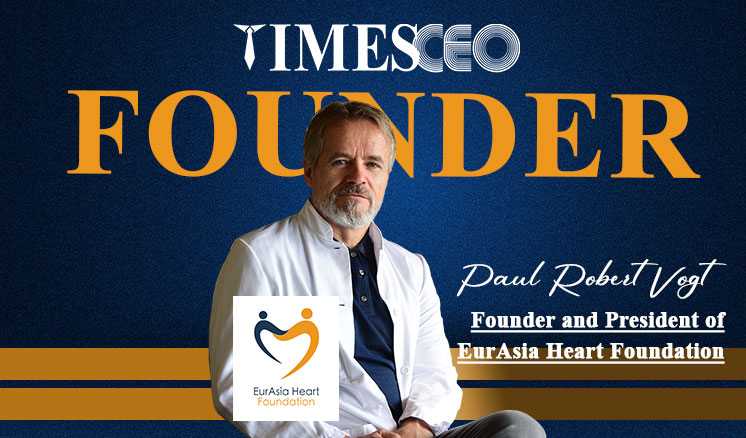
Paul Robert Vogt Interview
Professor Paul Robert Vogt, MD, is a globally acclaimed cardiovascular surgeon whose career spans more than four decades across Europe and Asia. Swiss Board–certified in cardiac, vascular, and general surgery with additional certifications in Germany, Russia, and Ukraine he has led some of the world’s most prestigious cardiac centers, including the University Hospital Zurich. As Founder and President of the EurAsia Heart Foundation, he has dedicated his life to improving access to advanced cardiac care in under-resourced regions. With numerous international professorships, leadership roles, and humanitarian missions, Prof. Vogt is recognized as one of the most influential voices in modern cardiovascular medicine.
A Global Career Rooted in Purpose
We started the interview by asking, “Your career spans decades across Switzerland, Germany, Russia, Ukraine, China, and beyond. What core philosophy has guided your global journey in cardiovascular surgery?”
Professor Paul Robert Vogt replied, “Throughout my career, one principle has remained constant: every patient, regardless of geography or resources, deserves access to the highest standard of medical care. Whether operating in Zurich, Kyiv, Tashkent, or Wuhan, I have always believed that medicine must transcend borders. Cardiovascular surgery is both a science and a responsibility. Precision, humility, and empathy guide every decision I make. I also strongly value interdisciplinary collaboration between surgeons, engineers, academics, governments, and NGOs because real progress arises when diverse expertise meets a shared purpose. This philosophy has shaped my work with EurAsia Heart Foundation and my academic engagements worldwide.”
The Vision behind EurAsia Heart
Times CEO Magazine: As Founder and President of the EurAsia Heart Foundation, what inspired you to build this organization, and what impact has it achieved so far?
Professor Paul Robert Vogt replied, “EurAsia Heart Foundation was born from witnessing preventable deaths in low-resource regions due to limited access to cardiac care. I recognized a need for a sustainable model not just short-term missions but long-term capacity building. Our mission is to bring modern, evidence-based cardiovascular medicine to countries where it is urgently needed by training local teams, performing surgeries, and establishing permanent programs. Over the years, we have conducted numerous humanitarian missions, introduced modern surgical techniques, empowered young medical professionals, and partnered with universities, ministries of health, and hospitals. Our YouTube channel documents this journey, showing real lives transformed through collective dedication.”
Guiding Teams While Advancing Patient Care
Times CEO Magazine: You have served as Director of Cardiac Surgery at the University Hospital Zurich and held leading roles across Europe and Asia. How do you balance clinical excellence with administrative leadership?
Professor Paul Robert Vogt replied, “Leadership in medicine requires clarity, structure, and vision, but also an unwavering commitment to patient care. My approach has always been to lead by example, maintain transparent communication, and create systems where excellence is reproducible every day. Administrative responsibilities from managing departments to shaping national programs should support, not obstruct, clinical standards. I focus on building strong teams, fostering continuous education, and ensuring that innovation and ethics guide decision-making. Ultimately, the best leadership is measured not in titles but in outcomes safer procedures, better-trained teams, and healthier patients.”
Future-Defining Breakthroughs
Times CEO Magazine: You are widely recognized for your contributions to congenital and adult cardiac surgery. Which advancements do you believe will shape the future of cardiovascular medicine in the next decade?
Professor Paul Robert Vogt replied, “The future of cardiovascular medicine will be defined by personalization, technological integration, and minimally invasive solutions. Advances in imaging, 3D modeling, robotics, and AI-driven diagnostics will enable earlier detection and more precise interventions. Tissue engineering and bioresorbable materials areas I am actively involved in through Heart Point Globalâ will revolutionize how we treat structural heart disease. Additionally, global collaboration will accelerate innovation, as knowledge increasingly flows across continents. However, while technology expands possibilities, the essence of surgery remains a human endeavor rooted in judgment, experience, and compassion. The best advancements will be those that remove unnecessary trauma and improve long-term quality of life.”
Global Teaching, Global Impact
Times CEO Magazine: You have held guest professorships in China, Myanmar, Russia, and other countries. How does teaching internationally influence your surgical practice and humanitarian work?
Professor Paul Robert Vogt replied, “International teaching constantly expands my perspective. Every country brings unique challenges, constraints, and cultural expectations that shape how medicine is practiced. By engaging with young surgeons and academics around the world, I gain insights that refine my own methods and deepen my understanding of global healthcare needs. Teaching is also integral to humanitarian work without education, no mission can create lasting impact. Through professorships in China, Russia, Ukraine, and other nations, I have helped establish long-term collaborations that benefit both local communities and the wider medical field. Knowledge exchange is one of the most powerful tools for improving global health.”
When Healthcare Meets Global Policy
Times CEO Magazine: You have been involved in medical leadership during complex geopolitical times. How do you see the relationship between medicine, policy, and diplomacy?
Professor Paul Robert Vogt replied, “Medicine is inherently diplomatic. It crosses borders, transcends politics, and focuses solely on human life. My advisory roles in several countries taught me that healthcare reforms require both medical expertise and political will. Physicians can serve as neutral, trusted advisors who help bridge divides and support evidence-based policy development. When health systems improve, societies stabilize and economies strengthen. Whether working in Ukraine, Russia, or Central Asia, my focus has always been on building trust, strengthening institutions, and ensuring that medical care remains a universal, apolitical right.”
A Vision for the Next Generation
Lastly we asked, “With decades of experience and multiple international honors, what legacy do you hope to leave for the next generation of surgeons and global health leaders?”
“I hope my legacy reflects a commitment to excellence, integrity, and global responsibility. For future surgeons, I want to emphasize the importance of rigorous training, ethical decision-making, and lifelong learning. Technical mastery is essential, but character defines a great surgeon. For global health leaders, I hope to demonstrate that sustainable impact comes through cooperation, education, and long-term vision not quick fixes. My work with EurAsia Heart Foundation, academic contributions, and international partnerships all aim to create a world where advanced cardiac care is accessible to every child and adult in need. If the next generation continues that mission, I will consider my legacy fulfilled.” Professor Paul Robert Vogt concluded
For more interview Professor Paul Robert Vogt website
Visit EurAsia Heart Foundation for more information
Also Read:
CEO of Sapientia One Global Solutions, Dr. Alicia B. Harvey-Smith
Matteo Ciampica: Contemporary Art through Time
Tunisia: Ecomarc’s journey from lab innovation to market success