Sofica Bistriceanu: Mental Balance and the Hidden Economics of Human Relationships
by Timesceo
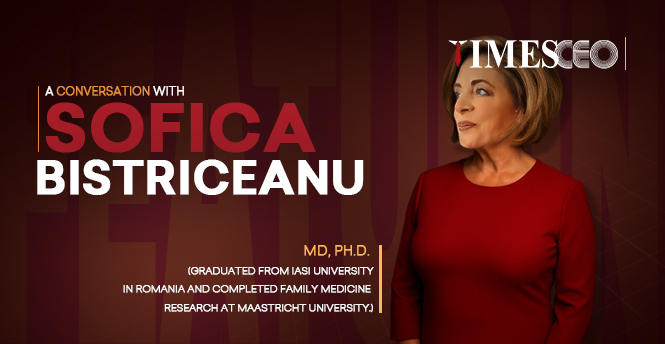
Sofica Bistriceanu Interview
In this thought-provoking conversation, Dr. Sofica Bistriceanu explores how mental balance, product valuation, and interpersonal conduct shape not only economic outcomes but also human health. Drawing from her medical and academic background, she explains how distorted pricing, lack of professional respect, and impaired communication can destabilize relationships across business and personal domains. This interview offers a unique perspective on the intersection between mental health, ethics, and sustainable collaboration.
Sofica Bistriceanu
Sofica Bistriceanu is a Romanian physician and researcher holding MD and PhD degrees. She leads the Academic Medical Unit CMI Dr. Bistriceanu in Romania and focuses on the impact of behavioral and relational factors on human health, social dynamics, and professional stability.
The Economic Psychology of Pricing
We began the interview by asking,
“Dr. Bistriceanu, your work connects mental balance with economic behavior. How does product pricing influence relationships and health?”
Dr. Bistriceanu replied,
“Human beings interact continuously because no one produces everything they need. Exchange is a fundamental part of survival and development. However, when product pricing is intentionally inflated to project wealth or overcome personal hardship, it creates emotional imbalance in the relationship.
Buyers feel undervalued when price and product value do not align. This sense of disrespect often pushes them to search for alternatives. Beyond losing customers, the producer also risks reputational damage through negative word of mouth. Over time, that erosion of trust can affect business stability, creativity, and even personal health.
Correct pricing is not merely an economic calculation. It is a psychological and ethical calibration. When price reflects value fairly, buyers feel respected in their judgment. That sense of mutual respect strengthens the relationship.”
Professional Presence and Interpersonal Conduct
Times CEO Magazine: Beyond pricing, you emphasize professional presence. Why is this so important?
Dr. Bistriceanu responded,
“Relationships are shaped not only by what we exchange but by how we behave during the exchange. Arrogance, dismissiveness, or an unprofessional attitude during selling or buying generates distress. People do not want to sustain relationships that make them feel diminished.
Professional presence signals competence and respect. When it is absent, it weakens collaboration and gradually dissolves trust. This dynamic applies equally to business partnerships, employer employee relations, and personal interactions.”
Recognition, Esteem, and Health
Times CEO Magazine: You also discuss the health consequences of relational imbalance. Can you elaborate?
Dr. Bistriceanu explained,
“Recognition of one’s work is fundamental for psychological equilibrium. When goods, services, or ideas are appreciated, individuals experience purpose and gratification. This often stimulates creativity and professional growth.
In contrast, persistent lack of esteem generates disappointment. Sleep disturbances frequently appear as an early symptom. Over time, this imbalance may evolve into irritability, inappropriate reactions, and weakened relationships.
If the affected person minimizes these manifestations, the dysfunction intensifies. The negative impact then extends to colleagues, partners, or clients, particularly those who are emotionally sensitive.
Mental impairment can therefore be both a cause and a consequence of relational deterioration.”
Repairing Harm and Restoring Balance
Times CEO Magazine: When misconduct occurs in daily work, what should be done?
Dr. Bistriceanu replied,
“Whether intentional or not, misconduct requires acknowledgment. Harm done to others must be addressed. Sometimes this involves professional training. In other cases, medical or psychological support is necessary.
Tolerance limits for inappropriate behavior should not be ignored. Allowing repeated dishonor or distrust destabilizes both individuals and systems. Sustainable relationships require correction mechanisms and honest collaboration.”
Relationships as Life Architects
Times CEO Magazine: How do these dynamics influence broader life outcomes?
Dr. Bistriceanu concluded,
“Human interactions shape economic, social, professional, and personal trajectories. The way individuals price their work, present themselves, and respond to others reveals their internal balance.
When product quality, pricing, and professional presence are misaligned, the consequences extend beyond business performance. They influence health and long term life stability.
Mental impairment weakens relationships. It can initiate failure, contribute to it, or emerge from prolonged exposure to dishonor and distrust.
Ultimately, sustainable success depends on fairness, recognition, and balanced conduct. When those elements are present, both individuals and systems thrive.”
For professional correspondence:
Academic Medical Unit CMI Dr. Bistriceanu, Romania
Email: bistriss@hotmail.com
Also Read:
Varun Singh, Managing Director: Read Interview
Joseph Frankie III: Trust and Discipline in Crisis
Atantra Dasgupta: Scaling Healthcare with Strategy