Hamdan Audi Alanazi: Building Systems, Not Just Companies
by Timesceo
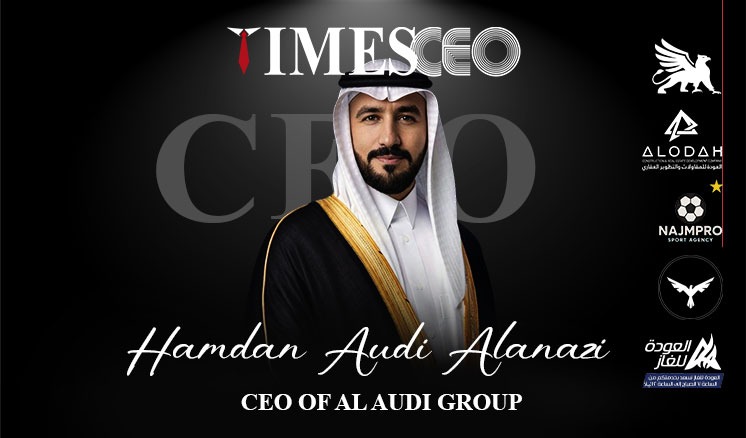
Hamdan Audi Alanazi Interview
In a region long defined by wealth in oil and capital, a new form of wealth is emerging knowledge, technology, and data. For Hamdan Audi Alanazi, the journey has never been about building isolated businesses. It has always been about building systems that create industries, develop people, and shape the future.
Building Systems, Not Companies
We started the interview by asking, “Your projects span industry, technology, and sports. What is the core philosophy that connects all your ventures?”
Hamdan Audi Alanazi replied, “We don’t build companies, we build systems. A company can succeed for a few years. A system can sustain growth for generations. From the beginning, my focus was on creating structures that can adapt to market shifts, develop human capital, and continue evolving long after the founder steps back.
Real wealth today is not measured only in capital. It is measured in knowledge, innovation, and the ability to create independence.”
The Birth of Baz Vision
Times CEO Magazine: Let’s talk about Baz Car Technology. How did this vision begin?
Hamdan Audi Alanazi replied, “The idea of “Baz” was born during my travels across the Gulf. In many meetings, leaders were discussing the same question what comes after oil!
I introduced Baz not as an electric vehicle project, but as a story of industrial independence. I asked a simple question: What if we stopped importing technology and started building it ourselves!
The challenge was never just building a car. The real challenge was building people before factories engineers who understand vehicles deeply, institutions that transform factories into schools of technology, and an ecosystem that moves from assembly to full manufacturing ownership. Some stakeholders saw the long-term opportunity. Others saw only the immediate cost. But every great industry begins as an expensive idea before it becomes a source of national wealth.
Today, Baz represents more than mobility. It represents capability the ability to design, manufacture, and innovate within the region.”
Strategic Government Collaborations
Times CEO Magazine: You have spoken about exploring partnerships with governments across the region. What is the vision behind these collaborations?
Hamdan Audi Alanazi replied, “Our vision is to build strategic partnerships that move beyond short-term projects and focus on creating sustainable industries for the future. We see strong potential for collaboration with governments in three key areas: electric vehicle manufacturing, cybersecurity infrastructure, and the development of professional football ecosystems.
In electric mobility, the goal is to localize production and build full industrial value chains that generate skilled employment and technological capability. In cybersecurity, it is about strengthening national resilience by developing local expertise, advanced protection systems, and future-ready digital infrastructure. In sports, particularly football, we aim to establish structured talent development pathways, world-class academies, and professional environments that can position the region as a global hub for emerging players. These partnerships are not just about business growth they are about shaping long-term economic independence, empowering young talent, and enabling the region to compete confidently on the global stage.”
Challenges of Industrial Transformation
Times CEO Magazine: What have been the biggest challenges in building an industrial ecosystem like this?
Hamdan Audi Alanazi replied, “Different countries move at different speeds. Priorities vary. Agreements take time. Industrial transformation is not a single decision it is a process. But what never changed was belief in the region’s potential.
We are not just building a vehicle. We are building an industry, a generation of engineers, and a future where the Gulf participates in global manufacturing value chains as a creator, not only a consumer.”
Cybersecurity as Sovereignty
Times CEO Magazine: Aman Shield Technology operates in cybersecurity. Why did this sector become so important to you?
Hamdan Audi Alanazi replied, “Because security today defines sovereignty. In recent years, the nature of conflict has changed. Threats no longer exist only in physical domains. Cyberattacks can disrupt banks, infrastructure, and entire economies.
During periods of regional tension, we witnessed how digital vulnerabilities could become national risks. But we also saw something powerful young engineers stepping forward to become the solution.
That moment reshaped Aman Shield’s mission. Cybersecurity is not a service you import. It is a capability you build. We began investing in training programs to develop a new generation of cybersecurity professionals’ individuals who understand threats before they even emerge. Our goal is to help create a cybersecurity ecosystem that supports governments, businesses, and society.”
Technology & National Strategy
Times CEO Magazine: How do you see the relationship between technology development and national strategy?
Hamdan Audi Alanazi replied, “Technology today is directly linked to economic resilience and national stability. Countries that depend entirely on imported solutions remain vulnerable. Countries that invest in local expertise build long-term strength. This is why partnerships between governments and private innovators are essential. Public vision combined with private execution can accelerate transformation significantly. Security, innovation, and independence must be developed together.”
Human-Centric Sports Vision
Times CEO Magazine: NajmPro Sports Agency represents a very different sector. What inspired your move into sports?
Hamdan Audi Alanazi replied, “Sport is one of the most powerful human industries because it connects emotion, ambition, and opportunity. The inspiration for NajmPro began in South America, where football is not just played it is lived. But the real turning point was meeting a young player with extraordinary passion and very limited resources. Supporting him was not just about developing talent. It was about changing a life.
Through structured training and long-term support, he progressed toward professional opportunities in Europe. But the true success was the transformation of his family’s circumstances.
That experience shaped our philosophy: we do not manage athletes as assets we develop them as complete human projects.”
Future of Gulf Sports Ecosystem
Times CEO Magazine: What is your long-term vision for sports development in the Gulf?
Hamdan Audi Alanazi replied, “Our goal is to build a full sports ecosystem. This includes world-class academies, scientific talent development, international club partnerships, and creating pathways for regional players to compete globally. We want the Gulf to become not just a destination for sporting events, but a global hub for talent creation. This transformation requires collaboration. Governments have the strategic vision. Private organizations can deliver operational speed and innovation.
Together, they can create lasting impact.”
Redefining True Success
Lastly we asked, “Across all these industries, what defines success for you personally?”
“Revenue is important, but it is not the ultimate measure. True success is measured by the industries you help build, the people you empower, and the independence you create. Legacy is not what you construct during your lifetime. Legacy is what continues to grow after you.
That is why our philosophy remains consistent across every sector:
We don’t build companies.
We build systems.
Systems that shape the future.” Hamdan Audi Alanazi concluded
حمدان عوده دلقم العنزي
لا يقتصر دورنا على بناء الشركات، بل يمتد إلى تطوير أنظمة متكاملة تُشكّل المستقبل، وتدعم السيادة الاقتصادية، وتُسهم في تحقيق تنمية مستدامة طويلة الأمد
Also Read:
Adeniyi Tinubu: Real Estate Visionary Leader
Learn from Failure, LLC Managing Partner Robert V. Sicina
Alexander Kopenkin, Founder of InTrouble