Dr. Christoph Guger: Advancing Global Education in Brain Computer Interfaces Inside the BCI & Neurotechnology Spring School
by Timesceo
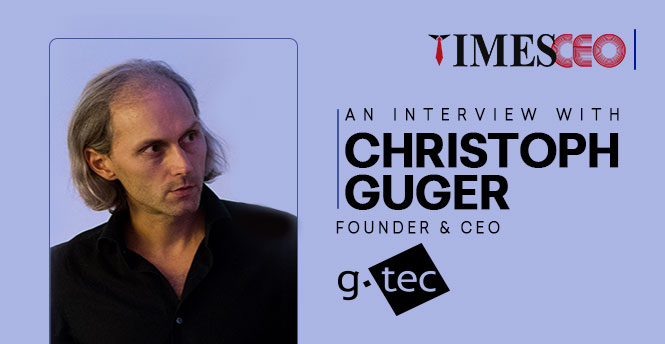
Dr. Christoph Guger Interview
In this exclusive conversation, Christoph Guger discusses the growing global importance of brain computer interfaces (BCI) and neurotechnology, and how the BCI & Neurotechnology Spring School has become one of the world’s most impactful training platforms in the field. He shares how the program connects neuroscience fundamentals with advanced technical development, while also preparing participants for real world clinical and industrial applications.
Beyond the Spring School, he also highlights the growing global hosting program that enables universities, research labs, and institutions worldwide to become official hosts. Through this initiative, organizations can serve as physical lab hosts, live viewing hubs, credit granting universities, or hackathon hosts, expanding access to BCI education and fostering regional neurotechnology ecosystems. A key extension of this initiative is the internationally recognized BCI Hackathon, which brings together students, researchers, and innovators to develop real world BCI applications in collaborative, high impact environments.
Held online from April 20 to 29, 2026 (Vienna time), the Spring School brings together students, researchers, clinicians, and innovators worldwide for an intensive 10 day learning experience designed to strengthen the next generation of neurotechnology leaders.
Dr. Christoph Guger
Christoph Guger is a leading expert and pioneer in the brain computer interface industry, recognized globally for his contributions to applied neurotechnology, BCI research, and innovation. With decades of experience bridging academic neuroscience and practical BCI systems, he has played a central role in making neurotechnology more accessible, scalable, and impactful across research, healthcare, and industry.
Building a Global Center of Excellence in BCI Education
We began the interview by asking, “Dr. Guger, the BCI & Neurotechnology Spring School is increasingly recognized worldwide. What makes this program stand out in today’s education landscape?”
Dr. Guger replied,
“The key strength of the Spring School is that it is not just a course. It is a complete learning ecosystem. Over ten days, participants receive structured, high level training that connects fundamental neuroscience with modern BCI engineering and real world applications.
Brain computer interfaces are one of the most interdisciplinary fields in the world. You cannot succeed by only understanding biology or only understanding technology. The Spring School is designed to bridge that gap in a practical and accessible way.
In addition, our hosting program allows institutions worldwide to actively participate in building this ecosystem. Labs can become official hosts, universities can integrate the Spring School into their curriculum for academic credit, and innovation hubs can organize live viewing events or host hackathons. This decentralized model strengthens global collaboration and accelerates knowledge transfer.”
The World’s Largest and Most Accessible BCI Education Program
Times CEO Magazine: The Spring School is described as the world’s largest and most accessible program dedicated to brain computer interfaces and neurotechnology. Why was accessibility such a priority?
Dr. Guger replied,
“Because the future of neurotechnology depends on global talent. Innovation does not come only from a few elite institutions. It comes from everywhere. From students, clinicians, engineers, and researchers across different countries and backgrounds.
That is why we made the program fully online and designed it around a global schedule. Taking place from April 20 to April 29, 2026, based on Vienna time, it allows people from around the world to participate in a serious, high level educational experience without needing to travel or relocate.
Through our global hosting initiative, we also ensure that institutions can create local engagement around the program, whether as certified lab hosts, official live viewing hubs, academic credit partners, or organizers of the BCI Hackathon. This hybrid global local model significantly expands participation and impact.”
Bridging Neuroscience, Technology, and Real World Applications
Times CEO Magazine: Many programs teach theory, but fewer focus on application. How does the Spring School balance scientific foundations with real world impact?
Dr. Guger replied,
“That balance is exactly what defines the Spring School. We focus on neuroscience fundamentals, but we also go deeper into signal processing, neurophysiology, machine learning, and system development.
But we don’t stop at technology. We connect this knowledge to real clinical and industrial applications. How BCI is used in rehabilitation, assistive technology, research labs, and emerging neurotechnology industries.
Participants gain a structured understanding of the entire ecosystem. From brain signals to usable solutions.
The BCI Hackathon plays an important role here. It transforms theoretical knowledge into practical innovation by challenging teams to design and prototype real BCI applications within a collaborative and time bound environment. It is where education meets implementation.”
A Global Network of Students, Researchers, Clinicians, and Innovators
Times CEO Magazine: Who typically attends the Spring School, and what kind of learning environment does it create?
Dr. Guger replied,
“One of the most exciting aspects is the diversity of participants. We have students who are just entering the field, experienced researchers, clinicians who want to apply BCI in healthcare settings, and professionals from industry exploring the future of neurotechnology.
This creates a unique global learning community. People exchange perspectives across disciplines, which is essential in BCI because no single background is enough.
The Spring School is not only education. It is also networking, collaboration, and community building at an international level. And through our hosting partners and hackathon hosts, this community continues to grow beyond the 10 day program.”
Why the Next Generation of Neurotechnology Talent Matters
Times CEO Magazine: BCI and neurotechnology are moving quickly. Why is now the right time for a program like this?
Dr. Guger replied,
“The pace of development is accelerating. We are seeing breakthroughs in brain signal decoding, wearable EEG, implantable technologies, and AI integration.
But rapid growth also creates a talent gap. The field needs more trained professionals who truly understand both the science and the engineering behind neurotechnology.
The Spring School, together with the global hosting program and the BCI Hackathon, is designed to help fill that gap by offering structured training and practical innovation opportunities at a global scale.”
Defining Success for the Spring School
Lastly, we asked, “What does success look like for the BCI & Neurotechnology Spring School in the years ahead?”
Dr. Guger concluded,
“Success means building the next generation of neurotechnology leaders. People who can responsibly push this field forward.
If participants leave the program with strong technical knowledge, deeper scientific understanding, and a clear view of how BCI can transform healthcare and industry, then we have achieved our mission.
The Spring School, together with our global hosts and the BCI Hackathon, is about creating a worldwide center of excellence in brain computer interfaces. One that is open, accessible, collaborative, and impactful.”
Connect with Dr. Christoph Guger on LinkedIn:
https://www.linkedin.com/in/christoph-guger/
Also Read:
Gayle Printz reshapes art with bold modern abstraction
Sofica Bistriceanu on Mental Balance & Relationship
Varun Singh, Managing Director: Read Interview