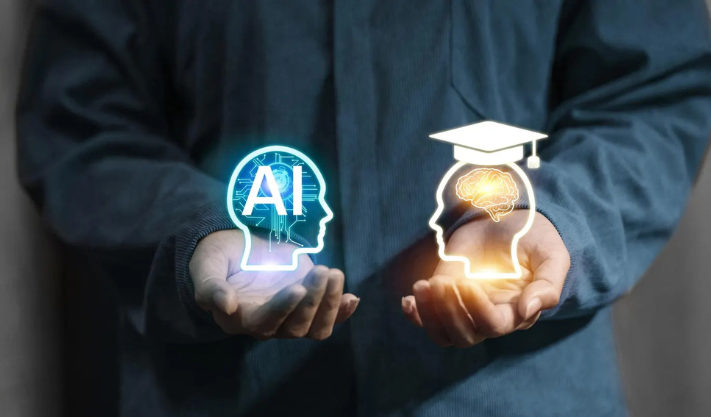
The Future of Education Is Changing Rapidly
Artificial intelligence is transforming the world faster than almost any other technology in modern history. From healthcare and finance to marketing, entertainment, and engineering, AI is reshaping industries, creating new career opportunities, and changing the skills employers value most. As a result, students today face a very different educational landscape compared to previous generations. Choosing a college and major is no longer only about following passion or selecting a stable profession. Students must now think strategically about adaptability, technology, creativity, and long-term career relevance in an AI-driven economy.
The rise of automation and machine learning has created uncertainty for many traditional career paths. Some jobs may disappear, while entirely new professions are emerging every year. In this rapidly evolving environment, students need to make informed academic decisions that prepare them not just for their first job, but for a lifetime of continuous learning and career evolution. Choosing the right college and major in the AI era requires balancing personal interests with future industry trends, technological literacy, and real-world adaptability.
1. Focus on Skills That AI Cannot Easily Replace
One of the smartest strategies for students today is choosing majors and career paths that emphasize uniquely human abilities. While AI is becoming highly effective at handling repetitive tasks, data analysis, and automation, there are still many areas where human creativity, emotional intelligence, leadership, and critical thinking remain essential.
Fields such as psychology, entrepreneurship, design, communication, healthcare, education, and strategic management continue to rely heavily on human interaction and decision-making. Even within technical industries, employers increasingly value people who can solve complex problems, lead teams, and think creatively.
This does not mean students should avoid technology-related majors. Instead, they should combine technical understanding with human-centered skills. For example, a student studying computer science can also develop communication and leadership abilities. Similarly, a marketing major can learn AI tools and data analytics to remain competitive in the digital economy.
The future workforce will likely reward individuals who can work alongside AI rather than compete directly against it.
2. Choose Colleges That Embrace Technology and Innovation
Not all colleges are adapting equally to the AI revolution. Some institutions are rapidly modernizing their programs, investing in digital learning, AI research, data science, and interdisciplinary education. Others may still rely heavily on outdated teaching methods that fail to prepare students for the future job market.
When selecting a college, students should carefully examine how the institution integrates technology into its curriculum. Colleges with strong innovation ecosystems often provide access to AI labs, startup incubators, research opportunities, coding programs, and partnerships with major technology companies.
Students should also explore whether colleges encourage cross-disciplinary learning. In the AI era, careers are becoming increasingly interconnected. Business students benefit from understanding data analytics, while engineering students benefit from communication and design thinking. Universities that support flexible and interdisciplinary education often produce graduates who adapt more successfully to changing industries.
In addition to academic reputation, students should evaluate internship opportunities, career placement support, and industry connections. Practical experience and networking are becoming just as important as classroom learning.
3. Think Beyond Traditional Job Titles
One major mistake students make is choosing majors based only on current job titles or trends. The problem is that many careers available today may evolve significantly within the next decade due to AI and automation. Instead of focusing narrowly on a single job, students should think about transferable skills and long-term adaptability.
For example, a student interested in healthcare may eventually work with AI-powered diagnostics and digital patient systems. A finance graduate might use predictive analytics and automated investment platforms. Even creative industries now use AI tools for content generation, editing, and design support.
Rather than asking, “What job do I want today?” students should ask, “What kind of problems do I want to solve in the future?” This mindset encourages flexibility and lifelong learning.
Majors that combine technical knowledge with adaptability are likely to remain valuable. Fields such as data science, cybersecurity, digital marketing, biotechnology, sustainability, AI ethics, human-computer interaction, and business analytics are expected to grow significantly in coming years.
However, students should avoid choosing majors solely because they appear profitable or trendy. Long-term success still depends heavily on genuine interest, motivation, and the willingness to continuously improve skills.
4. Develop Digital Literacy No Matter What You Study
In the AI era, digital literacy is becoming essential for nearly every profession. Even careers traditionally unrelated to technology now require familiarity with digital tools, online communication, automation systems, and AI-powered platforms.
Students do not necessarily need to become programmers or software engineers, but they should understand how technology impacts their field. Learning basic coding, data interpretation, AI applications, and digital productivity tools can provide a major competitive advantage.
For example, journalists increasingly use AI research tools, lawyers rely on legal automation software, and healthcare professionals use AI-assisted diagnostics. Teachers, marketers, architects, and entrepreneurs are also integrating AI into their daily workflows.
Colleges that encourage digital learning and technological experimentation help students become more adaptable and future-ready. In many cases, the ability to understand and collaborate with AI systems may become more important than deep technical specialization alone.
Students should also take advantage of online certifications, workshops, and digital learning platforms outside traditional classroom environments. The most successful professionals in the future will likely be continuous learners who regularly update their skills.
5. Prioritize Adaptability and Lifelong Learning
Perhaps the most important tip for students entering college today is understanding that education will not end with graduation. The AI revolution is evolving so quickly that industries, tools, and required skills may change multiple times throughout a person’s career.
Because of this, adaptability is becoming one of the most valuable professional traits. Students should choose colleges and majors that encourage curiosity, independent thinking, and continuous learning rather than memorization alone.
Internships, collaborative projects, leadership experiences, and real-world problem solving are increasingly valuable because they teach students how to adapt to uncertainty. Employers often prioritize individuals who can learn quickly, communicate effectively, and navigate changing environments.
Students should also remain open to career pivots. Many future jobs may not even exist yet. The rise of AI will create entirely new industries, business models, and professional opportunities. Those who remain flexible and willing to evolve will have the greatest advantage.
Rather than fearing AI, students should view it as a powerful tool that can enhance productivity, creativity, and innovation. The key is learning how to use technology effectively while maintaining the uniquely human skills that machines cannot replicate.
Preparing for Success in the AI Era
Choosing a college and major has always been an important life decision, but the AI era has made it even more complex and dynamic. Students today must balance passion, practicality, technology awareness, and long-term adaptability when planning their futures.
The smartest educational choices are no longer based only on prestige or salary potential. Instead, success increasingly depends on the ability to combine human creativity with technological understanding. Students who develop communication skills, digital literacy, adaptability, and critical thinking will likely remain valuable regardless of how industries evolve.
The future belongs to individuals who can collaborate with technology rather than resist it. By choosing forward-thinking colleges, future-ready majors, and a mindset focused on lifelong learning, students can position themselves for success in a world increasingly shaped by artificial intelligence.
In the end, the goal is not simply to survive the AI revolution but to thrive within it.
Also Read:-
How AI Is Revealing Why Companies Promote the Wrong Leaders
Your Leadership Culture Isn’t A People Problem. It’s A Biology One
7 Skills That Make CEOs Exceptional Leaders